Energy transition

The long way from random electricity from sun and wind towards 24×365 electricity. Overseen profitability transitions have to be considered as major accidents.


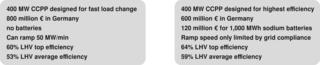
Fast load change power plants vs. high efficiency Fast load change power plants vs. high efficiency
Who killed the electric car at the beginning of the 20th century? The lead-acid battery. The same goes for any thoughts towards grid-scale batteries in the past.
From 24-electricity to 24×365 electricity From 24-electricity to 24×365 electricity
The next border is at 300 GW photovoltaic and 750 GWh batteries: some sunny summer days, and all Germany is 100% solar-electric all this time.
Simulation of 24×365 systems
So a simulation is 16 years × 365.25 days × 24 hours × 10 battery sizes × 10 power to sizes × 17 different loads = 238,435,200 decisions and calculations.
Hydrogen – methane – methanol
Hydrogen has the highest power-to-efficiency because no DAC - Direct Air Capture of CO2 is required. But the higher efficiency of hydrogen comes at the price of storage costs.
Prices used in the simulation
The equipment is different depending on the characteristics of the location. So Aalborg needs far more power to and less battery than Kampala.
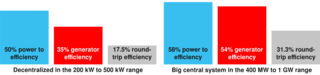
High voltage grid or no high voltage grid – that is here the question High voltage grid or no high voltage grid – that is here the question
To answer the question, we added to the simulation high-efficiency central systems with 58% at power-to and 54% at generation, grid losses already in the efficiency.
Simulation download and description Simulation download and description
The download contains the 6 locations shown in this paper, each in 3 variants: ⁣battery only, central, and decentral: https://climate.pege.org/2026/solar-yield.7z
Solar yield and conversion to 24×365 electricity
The wide range of solar yield becomes much wider after the conversion of gross yield to 24×365 electricity. 6 examples from our research of 50 locations.
Grid development in the past vs. today Grid development in the past vs. today
Parameters had been entirely different. The grid was to connect to distant coal power plants or hydropower. Was local production an option? Really not!
Energy from biomass loses against surplus electricity Energy from biomass loses against surplus electricity
Components like large storage of chemical energy and caloric power plants are necessary. So biomass competes against only one component: the power-to-X system.


  Download:   CORP paper PDF     Slides PDF     Video 189 MB  

  Cost optimization — the key to energy transition and climate protection
Paper written for the CORP.at conference March 22 to 25, 2026, in Vienna. My 2025 participation was a last-minute action, but now I have much time to prepare the paper.

Abstract
To meet the necessary cost optimization targets, we cannot hold the energy problem separate from all other problems: another major problem is housing.
Introduction
Many imaginations about our future had been created in the past with completely different parameters. Unchecked conclusions from the past endanger our future with unbearable costs.
My personal experience with a profitability transition My personal experience with a profitability transition
Birds can fly without knowing all the terms of aerodynamics. I reacted with my design change to an ongoing “profitability transition” without knowing the term at this time.
Solar yield and conversion to 24×365 electricity
The wide range of solar yield becomes much wider after the conversion of gross yield to 24×365 electricity. 6 examples from our research of 50 locations.
The GEMINI principle: double usage of land
No better solar power plant, no better housing possible on the same ground is the ultimate target of the GEMINI principle.
Off-grid fast charging settlements Off-grid fast charging settlements
It can start small, somewhere in a village, with a single GEMINI house with a big PV carport and 100 kW DC charging.
Energy-intensive industry
I once developed a scale for off-grid solar possibilities depending on photovoltaic size. But now is to make a big jump upwards on this scale: running, energy-intensive industry.
Agriculture: How many square meters does a human need for his food? Agriculture: How many square meters does a human need for his food?
Mankind started as hunters and gatherers. 12,000 years ago, 500,000 m² to 2,500,000 m² per human. With the agricultural revolution, the land use was reduced by 2 magnitudes.
Conclusion
All parameters are in a constant state of change. We have to check all the parameters and predict the development for the predictable future.
References
Roland Mösl: Energy Optimised Settlements – Enabler for Necessary Civilization Targets, Graz 2025


          Energy transition: The long way from random electricity from sun and wind towards 24×365 electricity. Overseen profitability transitions have to be considered as major accidents. https://climate.pege.org/2026/energy-transition.htm