Grid development in the past vs. today

Parameters had been entirely different. The grid was to connect to distant coal power plants or hydropower. Was local production an option? Really not! Let's look back one century, to the twenties of the 20th century. Independent from the political system, electrification was a high priority. Here in the West: “electricity to the last mountain farming village” and Lenin wrote, “Communism is Soviet power plus the electrification of the whole country”.

Parameters had been entirely different. The grid was to connect to distant coal power plants or hydropower. Was local production an option? Really not! Diesel engines were at this time no option. Large coal power plants had 18 to 20% efficiency. In the 200 kW range, only 8 to 12%. This means not only nearly double the coal but also higher transportation costs. There is the big coal power plant with its own railroad and a freight train full of coal every few hours. The next point is labor cost. Manual coal/ash handling was dominant in small plants; central benefited from scale and emerging automation.

Assuming a small consumer, industry, or settlement with 1 GWh/a electricity demand, the grid cost allowance had been 1 to 1.8 million € inflation-corrected. No question, grid expansion was a great idea. We just showed the range is 27 € to 151 € per kW photovoltaic. For the assumed 1 GWh/a consumer, this translates to a range of 27 to 534 thousand €. Denmark and Austria are “we already have a great grid” countries. Without these 2 countries in the examples, the range is only 27 to 56 thousand €.

Grid development in the past vs. today
Parameters had been entirely different. The grid was to connect to distant coal power plants or hydropower. Was local production an option? Really not!

Different time, different places, completely different outcome. When one century and a location more close to the equator changes the high voltage grid from a “must-have” to an “unnecessary, too expensive”.
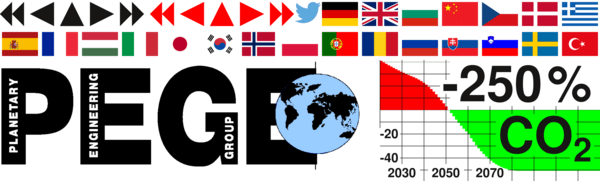
-250% CO2 emission until 350 ppm are reached again -250% CO2 emission until 350 ppm are reached again
Less CO2 emission is much too little, even zero emission is insufficient. Only a planet renovation with large-scale CO2 filtering and splitting from the atmosphere will help.


Filtering and splitting CO2 from the atmosphere Filtering and splitting CO2 from the atmosphere
Due to their enormous space and water requirements, plants are unsuitable for the necessary reduction of the CO2 content in the atmosphere. There is no room for 37 million km² of growing forest.


390 PWh/year electricity for CO2 from the atmosphere 390 PWh/year electricity for CO2 from the atmosphere
Reduce the CO2 content with Power to Carbon, generate fuels with Power to Liquid and use CO2 for indoor plant cultivation to replace large-scale agriculture.


Carbon fiber becomes standard material for construction Carbon fiber becomes standard material for construction
If we filter the 33.1 Gt CO2 emission of 2019 from the atmosphere and split it into C and O, we get 9 billion tons of carbon. What to do with it?


IPCC Report 2021: “Net Zero Emissions” Fairy Tale and its Devastating Consequences IPCC Report 2021: “Net Zero Emissions” Fairy Tale and its Devastating Consequences
Constantly contradicting itself, the IPCC 2021 report adheres to the completely inadequate “net zero emissions” target. This can only be thinking prohibitions.


Green dogmatism and the destruction of the German photovoltaic industry Green dogmatism and the destruction of the German photovoltaic industry
How the dogma “the demand for electricity will decrease” led to extremely wrong targets, which led to the destruction of the German photovoltaic industry in 2013.


Why Germany is failing in the energy transition Why Germany is failing in the energy transition
In the first decade of the new millennium, Germany was the great role model in the energy transition, why, on the other hand, the current EEG policy leads to disaster.


Sri Lanka crisis 2022 example of oil exit failures Sri Lanka crisis 2022 example of oil exit failures
Hit hard by the breakdown in tourism caused by COVID-19, the higher price of oil comes as the next blow. The serious failures of the industrialized countries.


Destructive cult prevents functional energy transition Destructive cult prevents functional energy transition
A horror novel about a world without renewable energy and recycling delayed a workable energy transition and thus effective climate protection by decades.


Functional energy transition vs. German energy transition Functional energy transition vs. German energy transition
We have to denounce very hard the grotesque German energy transition in order to turn all the enemies of this grotesque into fans of a functional energy transition.


Paradigm changes – Profitability transitions – Culture shocks
We can neither achieve energy transition nor stop climate change if we do not constantly review all parameters and abandon unsuitable views.


Cost optimization — the key to energy transition and climate protection
Paper written for the CORP.at conference March 22 to 25, 2026, in Vienna. My 2025 participation was a last-minute action, but now I have much time to prepare the paper.


  Cost optimization — the key to energy transition and climate protection


Paper written for the CORP.at conference March 22 to 25, 2026, in Vienna. My 2025 participation was a last-minute action, but now I have much time to prepare the paper.

Abstract
To meet the necessary cost optimization targets, we cannot hold the energy problem separate from all other problems: another major problem is housing.


Introduction
Many imaginations about our future had been created in the past with completely different parameters. Unchecked conclusions from the past endanger our future with unbearable costs.


My personal experience with a profitability transition My personal experience with a profitability transition
Birds can fly without knowing all the terms of aerodynamics. I reacted with my design change to an ongoing “profitability transition” without knowing the term at this time.


Energy transition
The long way from random electricity from sun and wind towards 24×365 electricity. Overseen profitability transitions have to be considered as major accidents.


The GEMINI principle: double usage of land
No better solar power plant, no better housing possible on the same ground is the ultimate target of the GEMINI principle.


Off-grid fast charging settlements Off-grid fast charging settlements
It can start small, somewhere in a village, with a single GEMINI house with a big PV carport and 100 kW DC charging.


Energy-intensive industry
I once developed a scale for off-grid solar possibilities depending on photovoltaic size. But now is to make a big jump upwards on this scale: running, energy-intensive industry.


Agriculture: How many square meters does a human need for his food? Agriculture: How many square meters does a human need for his food?
Mankind started as hunters and gatherers. 12,000 years ago, 500,000 m² to 2,500,000 m² per human. With the agricultural revolution, the land use was reduced by 2 magnitudes.


Conclusion
All parameters are in a constant state of change. We have to check all the parameters and predict the development for the predictable future.


References
Roland Mösl: Energy Optimised Settlements – Enabler for Necessary Civilization Targets, Graz 2025


          Grid development in the past vs. today: Parameters had been entirely different. The grid was to connect to distant coal power plants or hydropower. Was local production an option? Really not! https://climate.pege.org/2026/grid-development.htm